Electrical code changes rarely arrive with much fanfare. A new protection requirement, a change of labeling approach, and a tweak on a piece of equipment installation all seem simple enough on the page. On the job site, that small alteration can impact drawings, orders of material, inspections, scheduling of labor, and the order of crews in the workflow.
For electrical contractors, engineers, and project managers, code consciousness is part of the work that keeps a project on track. The more the details are understood early, the more smoothly the task proceeds, and when they’re missed, the consequences can be redo’s, delays in inspections, increased expense, and safety risk.
Why Electrical Codes Keep Changing?
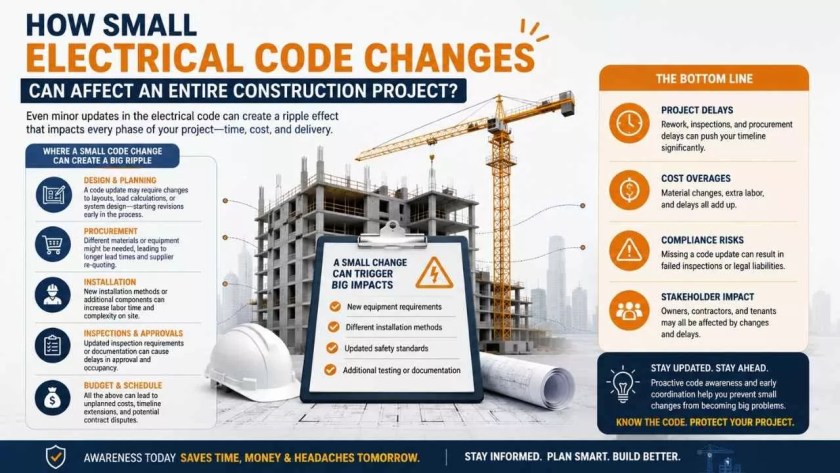
The electrical codes change as buildings change. There are more connected devices, bigger electrical loads, smarter control, backup power equipment, electric vehicle charging, solar components, energy-efficient technologies, and more of everything using electricity than many older buildings were designed to accommodate.
Each code update is aimed at reducing risk and improving consistency in the field. Some are about shock protection, some about fire hazards, equipment clearances, grounding, how systems are labelled, how systems should be installed and maintained.
Though the tone can seem “technicalese,” in practicality, the aim is safer buildings, fewer failures, and installations that inspectors, contractors, and owners trust.
For a construction project, a detail that was acceptable yesterday may now need a second look. If a crew misses even a small code update, and everything seems to be fine but fails inspection, that’s often where trouble begins, our habits running ahead of what is required right now.
How a Code Change Can Affect Design and Planning
Updating the code may affect the plan before installing equipment. This may include changes to the plan, updating of the panel, and the verification of the equipment’s location with respect to any clearances or access.
The impact of a minor change can be huge in how projects are priced and scheduled. A change of breaker type, a change of the load calculation, or the addition of a grounding detail will affect the material list and/or method of installation.
If the issue is identified during planning, it typically can be resolved through the pre-planning process. If it is not discovered until after rough-in, it will likely incur a delay.
The basis of successful planning is accurate information. Electrical contractors, engineers, estimators, and project managers have a mutual understanding of the assumptions made during their work, and typically, if one of those assumptions is incorrect, it will be the field crew who will find out. Discovering at a job site that a detail requires a change can be onerous.
Why Code Learning Looks Different by Location
Different parts of the country do electrical work differently. Surrounding states such as Colorado, Nevada, Arizona, and Idaho have regional similarities, but overall, they will have different day-to-day challenges because of climate, building requirements, utility service areas, and inspection procedures.
Different regions will present different challenges as well; for example, coastal areas deal with moisture issues, corrosion, and storm-related weather. Cities in the Northeast tend to have existing old buildings for renovations, while high-growth areas in the South can have more scheduling issues and require more labor coordination because of so many similar plans.
Utah is a good example, since the electrical work in Utah includes both rapidly growing metro areas, rural areas, mountain towns, and mountains, where the elevation makes the weather different.
Licensed professionals can take advantage of online approved coursework related to codes and safety topics in Utah electrical continuing education to help them stay educated while their licenses/seal are issued/renewed through the proper authority of the state.
The Material Chain Reaction
Code changes frequently appear on the materials list before they show up in the building itself. Code changes could affect the selection of breakers, size of conduits, placement of devices, labeling of devices, location of disconnects, and circuit types of protection.
Code changes create a “domino” effect throughout the project. If the original materials were ordered based upon a “previous detail,” the contractor may have to return materials, re-order materials, or “wait” to receive a product not ordered in the first purchase, all as a result of code changes.
Even a small item can keep a large installation waiting if crews need the material prior to closing walls or energizing equipment.
This is where code awareness becomes a scheduling tool. The sooner the team knows the requirement, the better able they are to order material appropriately, plan the proper order of installation, and avoid last-minute substitutions. Starting with a code change as a technical requirement, but becoming a material, labor, and timing problem in the field.
Inspection Delays and Rework
It can be something minor that stops the work of the electrical crew during inspection. A label is missing; the wrong device is in a required place; an old method of protection is being used; crews can’t get around equipment.
And the delay is not with the electrical crew alone; drywall might have to wait, start-up of equipment might be delayed, other trades may be working around incomplete areas, and a failed inspection could escalate pressure only on the project manager, especially if the owner is supposed to be able to move into the new building or pass closeout on a specified date.
This is one reason it is valuable to have current code knowledge before starting installation. The state is a good resource, for example, its guidance in electrical continuing ed for understanding how courses fit into license renewal and code knowledge.
On the jobsite, that knowledge helps crews catch small details early, ask the right questions, and pour less money into rework.
Safety Is Usually the Hidden Reason
Most electrical code updates are written in dense technical language, but the reason behind them is usually pretty straightforward. Somewhere in the real world, a problem showed up.
Maybe it was a shock risk, a fire hazard, poor equipment access, confusing labeling, or a type of failure that kept happening across different buildings.
That’s why code changes shouldn’t be viewed as just another layer of paperwork. In many cases, they come from real jobsite incidents, equipment failures, inspection issues, or shifts in the way buildings are actually being used.
Homes and commercial spaces today handle far more devices, chargers, controls, and connected systems than older electrical installations were ever designed for.
Groups like the National Fire Protection Association develop many of the safety codes and standards used throughout the electrical industry. And for contractors, staying current with those updates has real-world value.
A solid understanding of code requirements helps crews build systems that are safer, easier to inspect, and less likely to cause headaches once the building is occupied.
Better Code Awareness Helps the Whole Project Team
Electrical code awareness matters far beyond the electrician handling the installation. Engineers rely on it while putting together drawings and layouts. Estimators need a solid understanding of code requirements when calculating material costs and labor.
Project managers use it to build realistic schedules, and inspectors expect work that lines up with both the approved plans and code standards.
When everyone involved is working from the same understanding, projects tend to run much more smoothly. Decisions get made faster. Small questions are resolved before they turn into jobsite problems, and crews avoid wasting time redoing work that should have been caught earlier in the planning stage.
That’s also why quality control in electrical contracting plays such a big role. Early inspections, clear standards, and consistent workmanship help keep projects on track and reduce the kind of avoidable mistakes that slow everything down.
Practical Ways Contractors Can Stay Ahead
Staying abreast of code changes is a lot easier when it just becomes part of the workflow instead of something you remember to check right before the inspector shows up.
Even before a job is bid, teams can review code updates that may impact materials, labor pricing, or timelines. Then, before work starts, supervisors can review those changes against the drawings and specs, and local inspection expectations.
Even simple checklists help. Rather than a last-minute code-review frenzy right before inspection, you’re simply reinforcing existing good habits on the jobsite. Crews can tick off quick items like panel labeling, grounding, working clearances, circuit protection, conduit fill, equipment access, etc., as needed to keep moving. It need not slow production; typically, it pays off by preventing delays and rework later.
Good documentation is key, too. When codes change, what changed, who verified the event and impact of that change, how it affects the installation, and so on good order keeping keeps everyone: office team, field crew, inspector, property owner, all on the same page. And not being that organized is often the difference between something simple and a schedule slip of several days.
Code Knowledge Is Part of Project Control
Even a small change in the electrical code can create bigger issues than most people expect. On paper, it may seem minor. But once work starts on-site, that change can impact drawings, material orders, inspections, safety requirements, and even the sequence of the job itself.
And usually, the extra cost doesn’t stop at one adjustment. It tends to ripple through the schedule and affect multiple trades along the way.
Projects that run smoothly usually don’t treat code compliance as something to worry about at inspection time. The better approach is to build code awareness into the planning stage from the start.
When contractors, engineers, and project teams stay updated, review details early, and communicate changes clearly, there’s far less rework later on. Things stay organized, and installations are more likely to meet current standards without delays.
Electrical work leaves very little room for error. Every connection, label, clearance, and protection method matters because each piece affects the performance of the overall system.
Keeping up with code requirements helps crews avoid unnecessary problems and gives the project a much better shot at staying safe, efficient, and on track.